
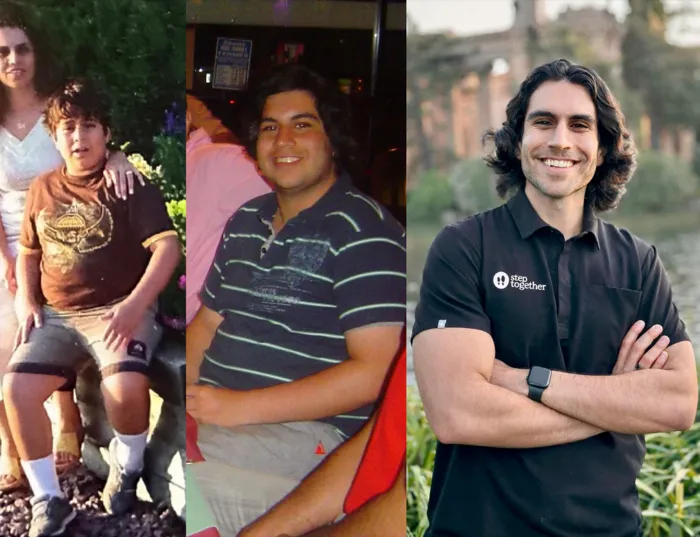
Growing up, my parents were under enormous stress. There was financial struggle from the beginning. They were both working a lot, trying to rebuild their careers while raising a family. There was arguing, disappointment, and pressure. Things were not going the way they had hoped.
But as a young kid, I did not fully understand any of that. I just knew that home did not always feel calm.
Looking back, it is obvious to me now that I was carrying a lot of their stress without knowing it. And a lot of that pain started before I was even conscious.
While my mother was pregnant with me, her brother died under tragic circumstances.
Then I was born prematurely at 32 weeks because my twin had passed away in the womb. Even now, I do not fully understand how much that shaped me, but every time I speak about it, tears still come.
For a while, life carried on. My parents were doing their best.
Then my father got caught in a devastating financial scam during the 2008 crisis. He had borrowed and invested a huge amount of money, much of it under my mother's name, and it disappeared. From there, everything in my family began to fall apart.
There was constant fighting. Aggressive fighting. The kind where my brother and I were trying to separate them because we were scared of what might happen. My mother was devastated. My father became more distant, more closed off, and eventually left entirely.
So when I look back now, it is obvious to me why I went to food.
Who was I supposed to bring my emotions to when my mother was drowning in her own pain and my father was buried in guilt, failure, and absence?
My brain found the most reliable coping mechanism it could.
Food.
At home, I was struggling a lot with overeating, especially at night. Bread, rice, fruit, cereal, whatever was there, I would eat too much of it. My mom even had separate fruit drawers in the fridge for me and my brother, and I would finish mine almost instantly and then eat his too.
I was the kid who was always hungry.
And what I understand now is that it was not just hunger. My brain was constantly looking for relief. Constantly looking for dopamine. Constantly looking for serotonin. Constantly trying to numb, suppress, or distract from emotions that felt too big for me to carry.
I was also always in my head. There was so much mental noise, so much overthinking, so much internal chaos. My mind rarely felt calm. And when your brain feels like that, food can become the easiest way to shut it off for a little while. Looking back now, I can clearly see how much undiagnosed ADHD played a role too. The emotional stress, the chaos, the anxiety, all of that overloaded my system so much that my brain was constantly seeking stimulation and relief, and food became one of the fastest ways to get both.
Around grade four and five, the bullying really started. Kids were picking on me because of my weight, sometimes pretty violently. The most painful memory I have is being tricked by a few cool kids into playing with them outside in the snow, only for them to trip me, rip my clothes apart, kick me, and call me fat.
That was when I really started becoming self-conscious.
I became more introverted. I pulled away. I developed the identity of the secluded kid, the kid who did not really need friends. Not because I truly did not need them, but because that felt safer than risking more shame. By the time I entered high school, I had fully taken on the identity of the overweight kid.
I remember being obsessed with finding a uniform that fit me in a way that made me look less overweight. Every year I had to buy a bigger uniform. I started around a medium and ended up at double XL by the end of high school. I remember coming home, releasing my belt, finally breathing, and feeling how uncomfortable I had been in my own body all day.
But the truth is, the bullying was not the deepest source of the pain. It made things worse, but the majority of the emotional stress I was carrying was actually coming from home.
And I want to be clear, that does not always mean there has to be massive trauma or obvious chaos in the home. Sometimes there is. In my case, there definitely was a lot of emotional pain. But sometimes it is a loving family doing their best and still missing the deeper layers of what is happening. Sometimes it is ADHD. Sometimes it is emotional sensitivity. Sometimes it is subtle stress. Sometimes it is a relationship with food that has been passed down for generations and feels so normal that no one thinks to question it.
That is one of the biggest things I wish more people understood:
When a child is struggling with food, the food is almost never the real problem.
The overeating is the symptom. The bingeing is the symptom. The hiding food is the symptom.
The weight is the symptom.
The real issue is usually much deeper.
For me, it was grief. Stress. Chaos. Fear. Shame. Loneliness. Emotional pain that no one around me really knew how to help me process. And because I did not understand any of that, I thought the problem was me.
I thought I was weak.
I thought I had no discipline.
I thought I just could not control myself.
My mom tried everything she could think of to help me. Jenny Craig. Weight Watchers. Herbalife. Optavia. Pediatricians. Dietitians. Therapists. Trainers. She spent tens of thousands of dollars trying to help me. Every single time I would lose some weight, gain it back, and then feel even worse.
The worst part was not just that the programs failed.
The worst part was that I believed I was the failure.
My mom would also try to scare me into dieting. She would warn me about diabetes. She would try to restrict what I ate. My dad was more hands-off, but he would joke about my stomach, or tell me to just tell my mind not to eat. No one was asking what was actually going on underneath.
And the hard part is, my mom herself was also struggling with food. She was always dieting, always trying to control her body, always in some form of binge and restrict. Later I learned that she had made herself throw up from a young age.
I still remember one day after a Chinese buffet, when I had eaten too much and felt sick, she took me into the bathroom and showed me how to make myself throw up so I would not absorb all the calories.
And I kept doing that for over a decade.
Even when I was exercising a lot, dieting, and trying everything, if I lost control and binged, I would make myself throw up. Sometimes I would binge again and do it again that same night. I was deeply ashamed of it. No one really knew. And every time I did it, I told myself it would be the last time.
It never was.
Even when I became successful later in life, even when I had the engineering career, the promotions, the startup, and all the external signs that I had my life together, I was still coming home at night and struggling with food in private.
I finally realized I was going to have to go much deeper.
That is what led me into meditation, emotional work, and really understanding what was going on inside me. Once I started dealing with the root emotions, everything began to change. I started seeing how every binge had a trigger. Sometimes it was acute stress. Sometimes it was accumulated emotional pain. Sometimes it was old memories I did not even realize I was still carrying.
Once I started dealing with those deeper layers, I did not need food in the same way anymore.
That is what changed my life.
And that's why I created Step Together
I did not create Step Together because I wanted to create another weight loss program.
I was forced through these programs from a young age, and still feel disgusted thinking back at them.
I founded Step Together because I realized that weight was never the real problem.
At one point in my mid-twenties, after leaving engineering behind and starting to understand myself deeply, I went on a backpacking trip across Europe with my dad and my brother.
One night in Venice, I went out alone and sat by the water. I was in a place in life where I had started to understand my pain, but I still did not know what I was meant to do with it.
And that night, I asked the stars a question.
What should I do next?
I heard something crystal clear:
Take care of the children and everything will work out.
At the time, I didn't fully understand what that meant. But not long after that, two kids from my mother's social circle who were both struggling with excess weight started spending time with me. I mentored them. I worked out with them. I walked with them. I tried to help them the way I wish someone had helped me.
But it did not work.
And it did not work because every time they left me, they went right back into the same environment that had shaped their weight in the first place. The same stress. The same emotional chaos. The same unhealthy patterns. The same struggling parents.
That is when I realized something I will never forget:
You can only help a child so much if the parents and the environment stay the same.
That became the beginning of Step Together.
I started trying to help the parents understand what was really going on. Not just the eating. Not just the weight. But the emotional stress underneath it. The habits. The coping. The patterns being modeled every day at home.
And what I saw was incredible.
When the parents really understood, and when they changed, the child often changed without even being directly coached.
The overeating softened. The weight started stabilizing. The emotional tension in the home shifted.
The child stopped looking like the problem.
And that was everything to me.
Because I knew firsthand how painful it is for a child to feel like they are the problem. I knew what it felt like to be taken to program after program, diet after diet, and believe that I was the failure every time it did not work.
I founded Step Together so that children would not have to go through that.
So that parents could understand what is really happening.
So that the child does not have to carry the shame.
And so that we can help families solve the real issue, not just fight the symptom.
What Makes Step Together Different
Before Step Together, I built a successful career in engineering. I climbed fast, managed teams at Microsoft, and even built my own VR startup. On paper, it looked like success. But underneath it, I was still carrying a lot of unresolved pain.
That is part of what gives me a unique lens now.
I know what it looks like when someone seems high-functioning on the outside and is deeply struggling on the inside. I also know what it takes to go inward, become radically honest with yourself, and rebuild from the root.
Since then, I have spent years combining lived experience with a deep understanding of nutrition, psychology, emotional health, trauma, addiction, fitness, and behavior change.
My engineering background also shapes the way I see this work. I naturally think in systems. I look for patterns. I want to understand the real mechanism underneath the symptom.
And that is a big part of what makes Step Together different.
We do not look at a child's weight and ask only, what should they eat?
We ask, what is actually going on here?
What is happening in the home?
What pain is being carried?
What is being modeled?
What is the child trying to soothe?
How is their brain adapting to stress?
Is this really about food, or is food just the most visible symptom?
And not every family we help is in obvious chaos or deep dysfunction. Sometimes the family is loving, stable, and doing their best, but they still do not understand the deeper layers of what is happening. Sometimes it is ADHD. Sometimes it is emotional sensitivity. Sometimes it is subtle stress. Sometimes it is a generational relationship with food that no one has ever questioned because it just feels normal.
That is what makes this mission so beautiful to me.
It keeps attracting a very special kind of person.
Again and again, the people who end up working at Step Together are people who have lived through their own version of this story. Different details. Different families. Different forms of pain. But the same deeper pattern of emotional struggle, coping, excess weight, shame, disconnection, and eventually realizing that the problem was never just food.
So many of us know what it feels like to be the child who is struggling and not fully understood.
That is why we help differently.
This is not just a company full of people who studied these problems from the outside. It is a company full of people who have had to fight their way through some version of them. And now, on the other side of that, there is this shared desire to help children not go through the same pain we did.
To me, that is one of the most beautiful parts of Step Together.
It feels like this mission keeps calling in people whose deepest purpose is to take what once hurt them and turn it into protection, understanding, and healing for children and families.
That is what makes Step Together different.
What I Want Every Parent to Hear
If there is one thing I would want every parent to understand, it is this:
Your child's weight is not the real problem. It is a symptom.
The overeating is a symptom.
The sugar cravings are a symptom.
The sneaking food is a symptom.
The constant hunger is often a symptom.
The real question is:
What is the root cause?
What is your child carrying emotionally?
What is happening in the environment?
What is being modeled at home?
What does food do for them internally?
Is their brain constantly overstimulated, overwhelmed, and seeking relief?
Are they using food for dopamine, for comfort, for suppression, for escape?
And that deeper cause does not always mean major trauma or obvious dysfunction.
Sometimes it is a loving family that simply does not yet understand ADHD.
Sometimes it is a home where food has always been used for comfort, celebration, stress relief, or connection across generations, and no one realized how much that was shaping the child.
Sometimes it is not pain in the dramatic sense. Sometimes it is subtle overwhelm, unmet emotional needs, or patterns that have been normalized for so long that no one sees them anymore.
You are never going to solve this by only focusing on food rules, calories, exercise plans, and discipline.
You have to go deeper.
And that also means being willing to look at yourself.
Children do not do what we tell them.
They do what they see.
They absorb how we cope, either with food or other substances and behaviors.
How we regulate.
How we handle pain.
How we speak about ourselves.
How we move through life.
And I'm not saying this to create guilt. I'm saying this to raise your awareness.
What I wanted most as a child was not another diet.
What I really needed was for someone to understand that my hunger was something else in disguise.
And for your child, that understanding has to begin with you.