
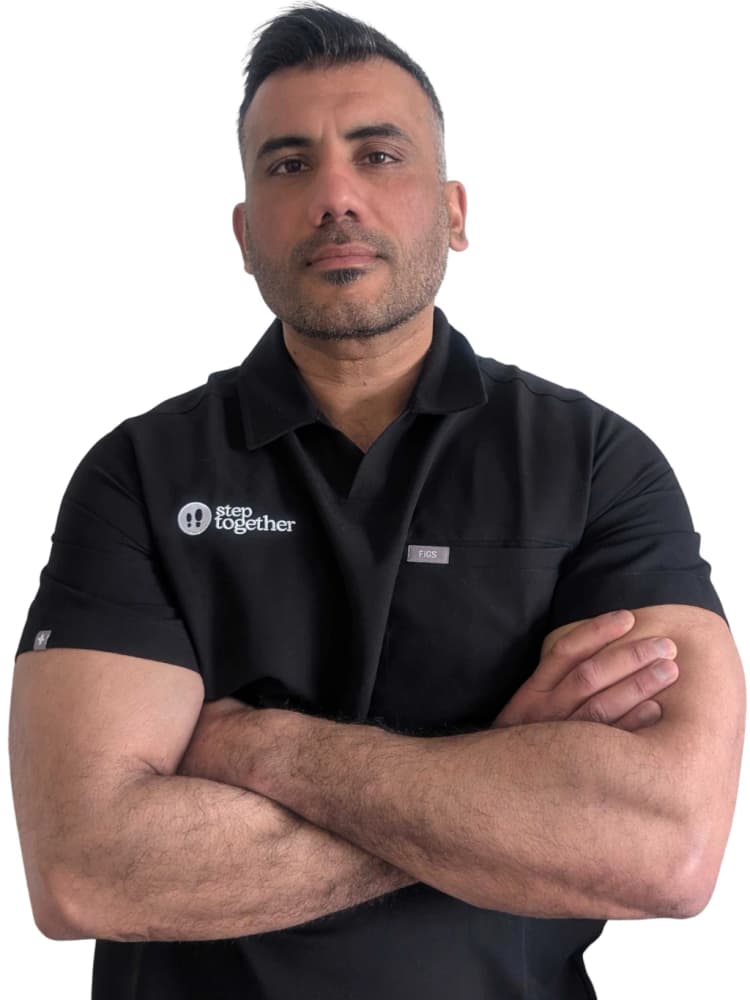
The memory still invokes shame, even now at 41.
It takes me back to grade 5, when I started noticing notes being passed among the girls in class. By recess, the story had spread. My body was settling in a way that made me painfully self-conscious, especially my hips and behind, and the joke became that I must have put a "pillow" in my pants. That joke followed me for the rest of the school year.
At home, it was not much safer.
My older brothers took every opportunity to mock me for my weight. My mother, God rest her soul, called me "Aloo," meaning "potato." It may have begun as a pet name, but it could also be used as a weapon when needed. To this day, I still hate potatoes.
When I reflect on my childhood, I do not see one simple cause behind my struggles with weight. I see many forces converging at once. I was a middle child in a perpetually impoverished household. We lived in survival mode. There was little room for structure, very little sense of ease, and not much luxury for things like planned meals or family outings. I was not fond of water and drank 4 litres of milk a day instead. Then, after my father declared bankruptcy in 1996, my weight began to climb even more in the years that followed.
Those years were tough.
At 12, I was already looking for ways to help ease my family's financial hardship. I delivered flyers for a local pizza store at 5 cents a flyer, hoping in some small way to change our circumstances. Life felt hard, and I learned to soothe my pain with food and escape through movies and television.
Only much later did I begin to understand how much more was going on beneath the surface.
My son's ADHD assessment eventually led to my own diagnosis. Looking back on the 90s, when ADHD and neurodivergence were rarely understood the way they are today, I can now see how profoundly that lack of understanding affected me. I sincerely wish that awareness had existed back then.
Because when your physical form invites assumptions of unhealthy eating, lack of control, inadequacy, or being a burden, your very worth starts to feel at stake. I struggled to be seen beyond what people assumed about me, and I carried a constant sense of shame. Over time, that shame hardened into anger, and into a fierce conviction to prove my worth.
Although I have made great strides in accepting myself and recognizing the value I bring to this world untethered from my physical form, it took a great deal of pain to get here. And it is now my intention to help make sure others do not have to walk those same treacherous roads to find their light.
Why I Joined Step Together
That is part of why Step Together resonated with me so deeply.
At the time, I was founding a new automotive startup while also pursuing my Executive MBA, and I needed part-time work to help lessen the financial strain. I was not looking forward to the usual retail grind. Then my wife came across the posting and sent it to me with one simple line: "This job is made for you."
She was right.
To be given the opportunity to use the ruins of a traumatic past to help construct a safer way for other children and families feels like a divine gift. Every child and every family deserves the chance to be inspired toward a better way.
As an overweight, depressed, and troubled child, one of my deepest pains was feeling like a problem to solve. A burden on the very people I depended on for safety and guidance. That pain left cracks so deep that I can still feel where the cavity once was.
What I love about Step Together is that it does not place that burden on the child.
It makes the journey whole for the entire family. It empowers parents to become the change they wish to see, and gives them the guidance and support needed to do that work. It protects the child from feeling like the "problem," and instead helps the family, beginning with its leaders, become the solution.
How I'm Uniquely Positioned to Help
My path to this work has not been a straight line.
At 16, I got a membership at the YMCA and would bike there after school. There, I found something I deeply needed: support, encouragement, and community. Bodybuilding became my first sanctuary from childhood obesity. I lost the weight and earned the nickname "Tank."
But life remained complicated.
My desire to help provide financial relief for my family, and to spare my mother from backbreaking labor serving wealthier families, eventually led me into street gangs and criminal affiliations. I escaped that life at 21 and soon entered the health and fitness industry, where I built an 11-year career, including 5 years in ownership.
Today, I am in the final year of my Executive MBA. I continue to work with at-risk and struggling youth when I am afforded the opportunity, and I have also been blessed with the gift of raising 4 beautiful children, ages 15, 13, 10, and 2. I have been married for 18 years to a woman who found me as a stray and loved me toward purpose.
Wholistic health and wellness have been integral to my life since my mid-teenage years. The more I observe health as a whole, the more I understand its power. There is no one-size-fits-all answer, but the foundation remains the same:
It starts from within ourselves and shines through with time.
What I Want Every Parent to Hear
And if there is one thing I would want every parent to hear, it is this:
Being overweight is less about will and more about circumstance.
No child chooses to be overweight. No child chooses to be picked last on the playground. No child chooses to be seen as lazy or self-destructive. No child chooses to become a source of worry for their parents. No child chooses to feel unattractive. No child wants to avoid shopping for clothes. No child wants to hate themselves for something they have limited power to fully understand.
That is the trust and power every parent holds: the power to help make sense of difficult things, to do the hard work of change, and to create security and sanctuary for the child who depends on them.
That famous Gandhi quote, "Be the change you wish to see in this world," does not only apply to activism or politics. It applies in the home too. It applies to every relationship where someone looks to you for guidance, steadiness, and love.
Be the change you wish to see in your child. Be their guide. Be their light. Be the power that nurtures their world.